German grammar, made clear.
Structured lessons on every core grammar topic — articles, noun cases, pronouns, modal verbs, tenses, word order and prepositions — with clear rules and real examples.
 Study German grammar free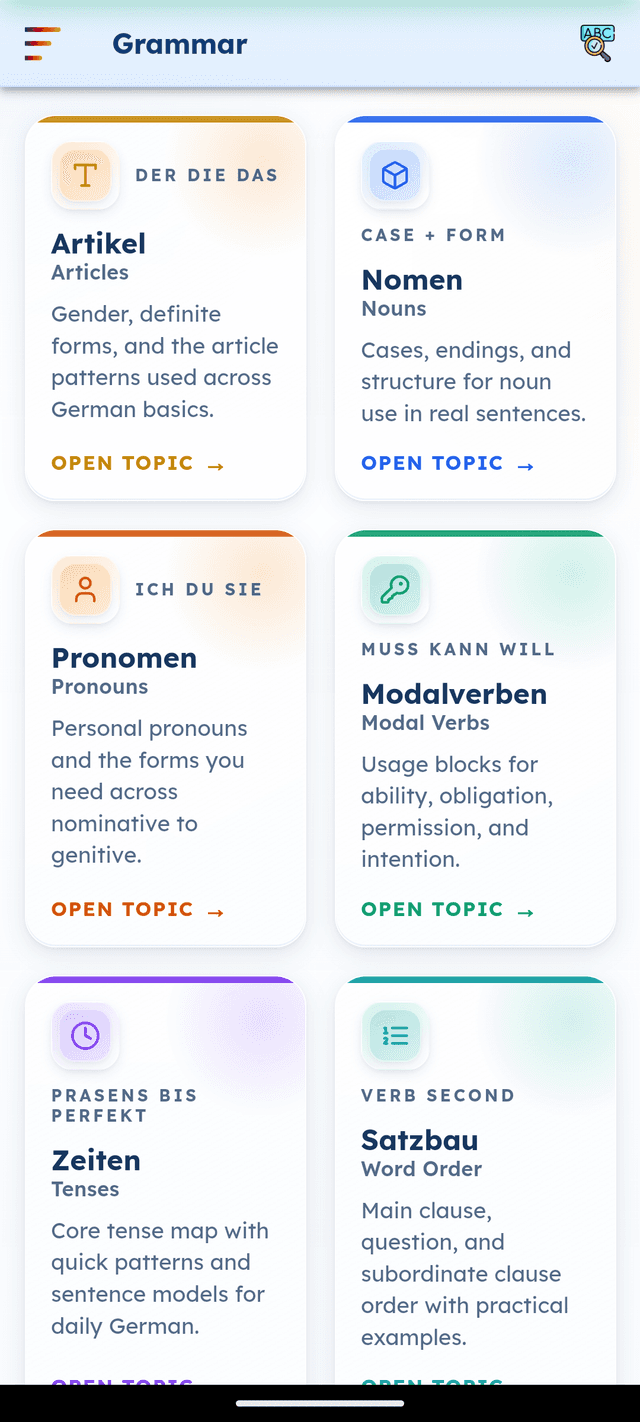
German grammar has a reputation for being complex, but most of its logic is consistent once you understand the underlying patterns. GermanVault organises grammar into focused topic cards so you can study one area at a time, see how the rules work, and find examples you can use immediately.
Articles — der, die, das across all 4 cases
German has three genders (masculine, feminine, neuter) and four cases (Nominative, Accusative, Dative, Genitive). The definite article changes form for each combination — 16 combinations in total. GermanVault presents all definite and indefinite article tables clearly so you can learn the full declension system rather than memorising random exceptions.
Noun cases — Nominative, Accusative, Dative, Genitive
The four German cases mark the grammatical role of a noun in a sentence. Nominative is the subject, Accusative is the direct object, Dative is the indirect object, and Genitive expresses possession. Each case comes with clear explanations, the corresponding article changes, and example sentences showing real usage.
Pronouns — personal, possessive, reflexive
Personal pronouns (ich, du, er, sie, es, wir, ihr, sie, Sie) decline across all four cases. Possessive pronouns (mein, dein, sein…) must agree with both the possessed noun's gender and the case. Reflexive pronouns (mich, dich, sich…) are needed for reflexive verbs. GermanVault covers all three types with full declension tables.
Modal verbs — müssen, können, dürfen, wollen, sollen, mögen
The six German modal verbs each carry a distinct meaning — necessity, ability, permission, desire, obligation, and preference. They follow a different conjugation pattern from regular verbs and change meaning significantly in Konjunktiv II. GermanVault explains each modal verb with usage rules and example sentences.
Word order — main clause, subordinate clause, questions
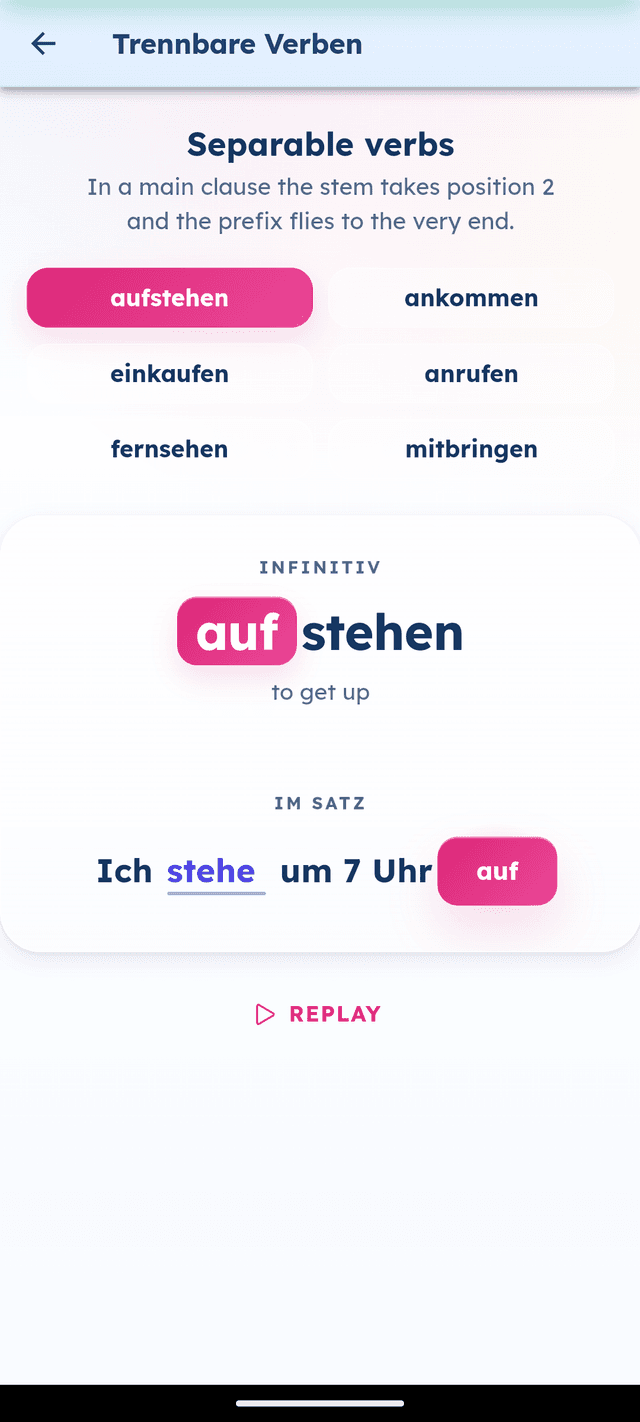
German word order follows the Verb-Second (V2) rule in main clauses, verb-final order in subordinate clauses, and inverted order in yes/no questions. Getting this right is essential for sounding natural and for passing written exams. GermanVault covers all three structures with clear pattern diagrams and examples.
Prepositions with cases
German prepositions are tied to specific cases — some always take the Accusative, some always take the Dative, and some (Wechselpräpositionen) take either depending on meaning. GermanVault lists all prepositions grouped by their case requirements so you can learn them systematically.
Screenshots
See it in action
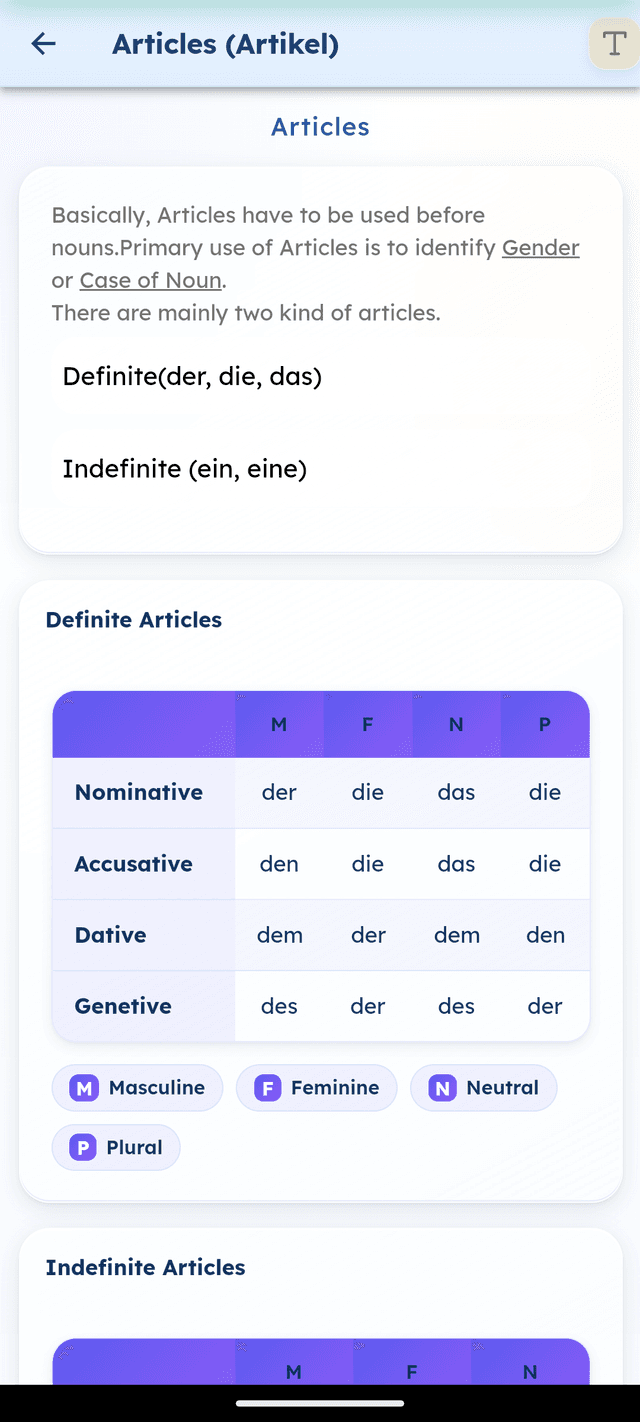
Articles — all 4 cases
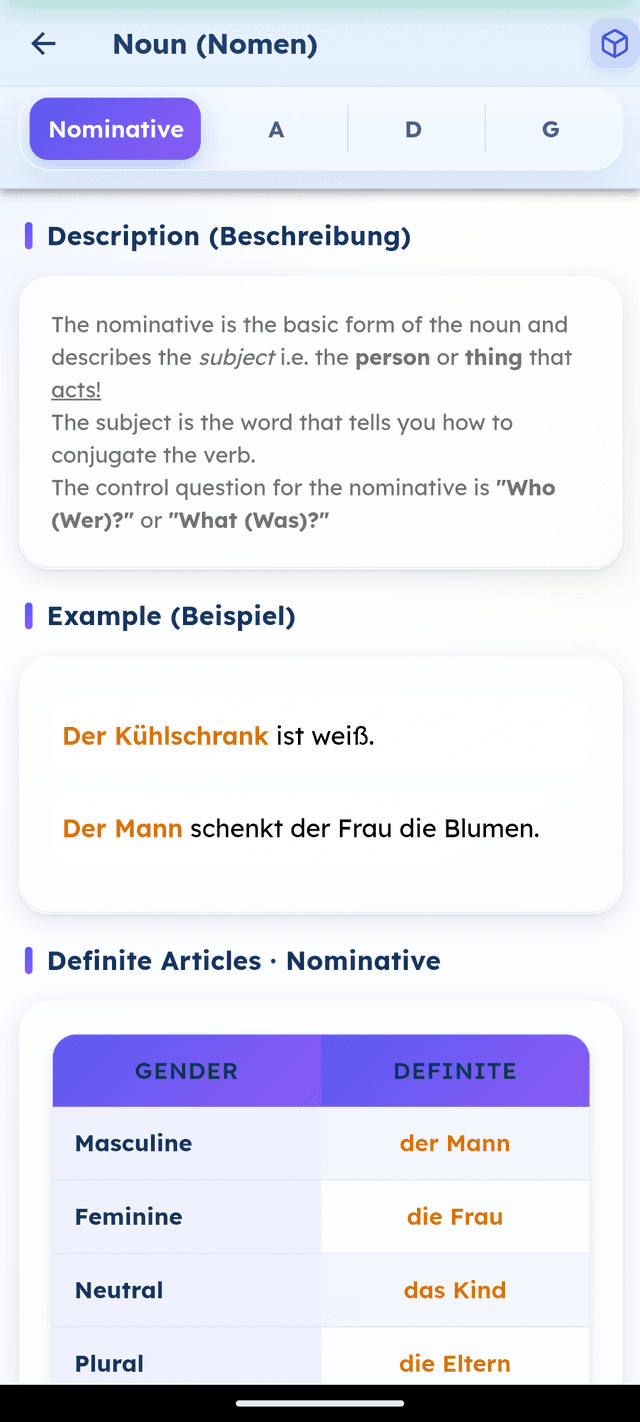
Nouns & Cases
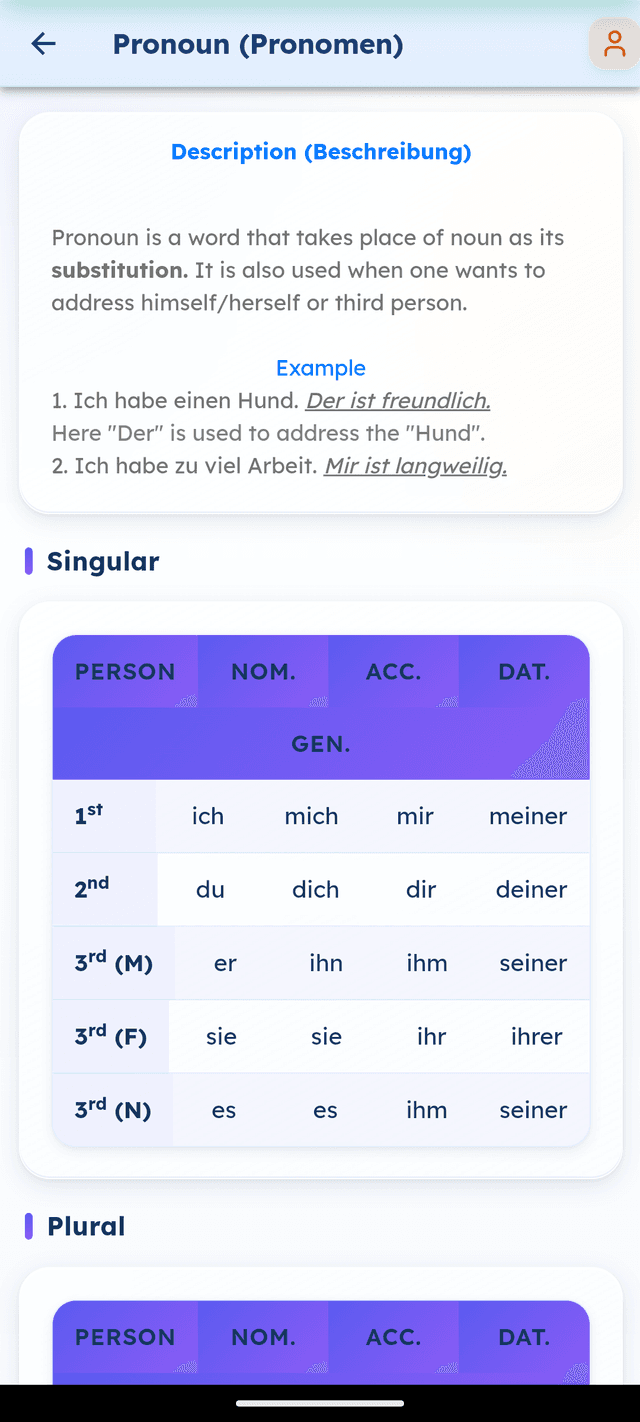
Pronouns
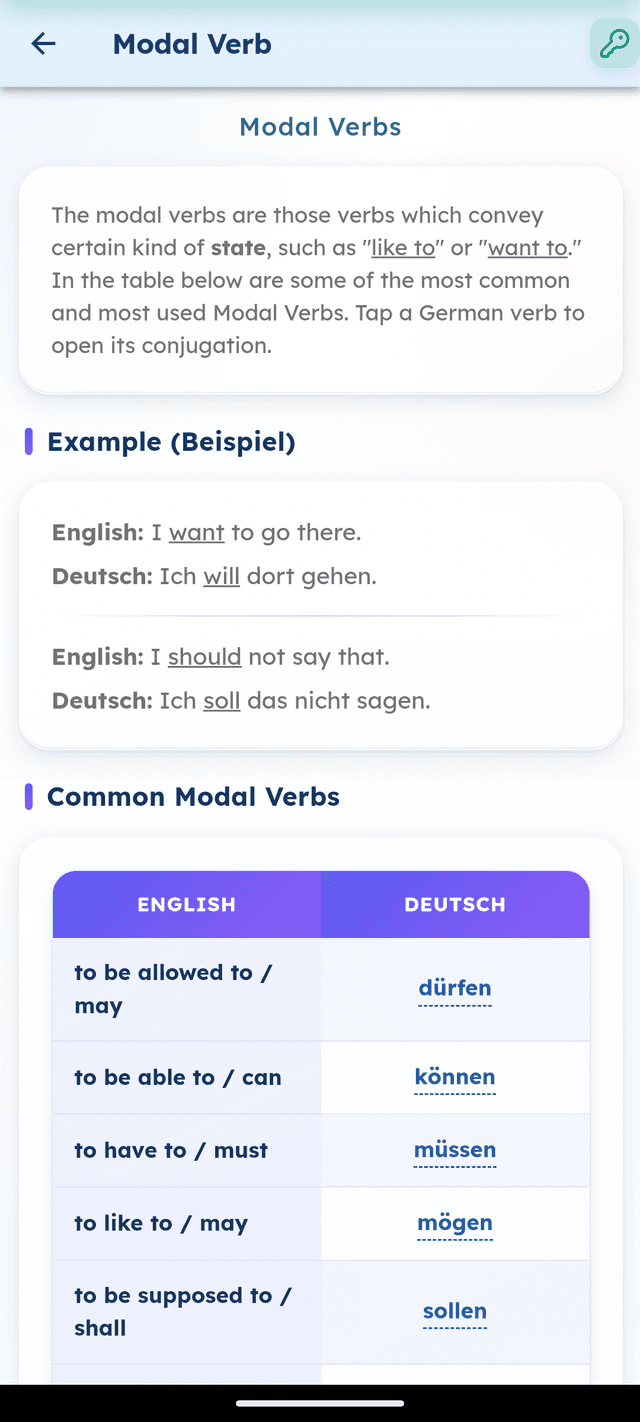
Modal Verbs
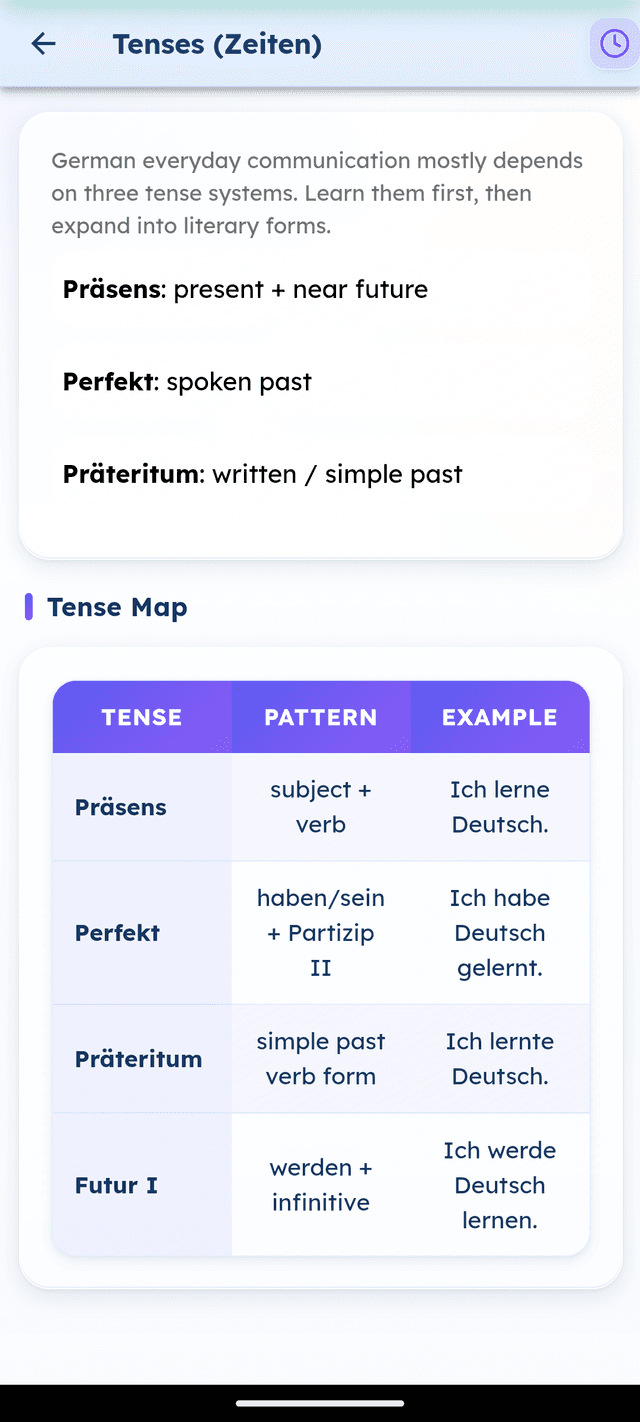
Tenses
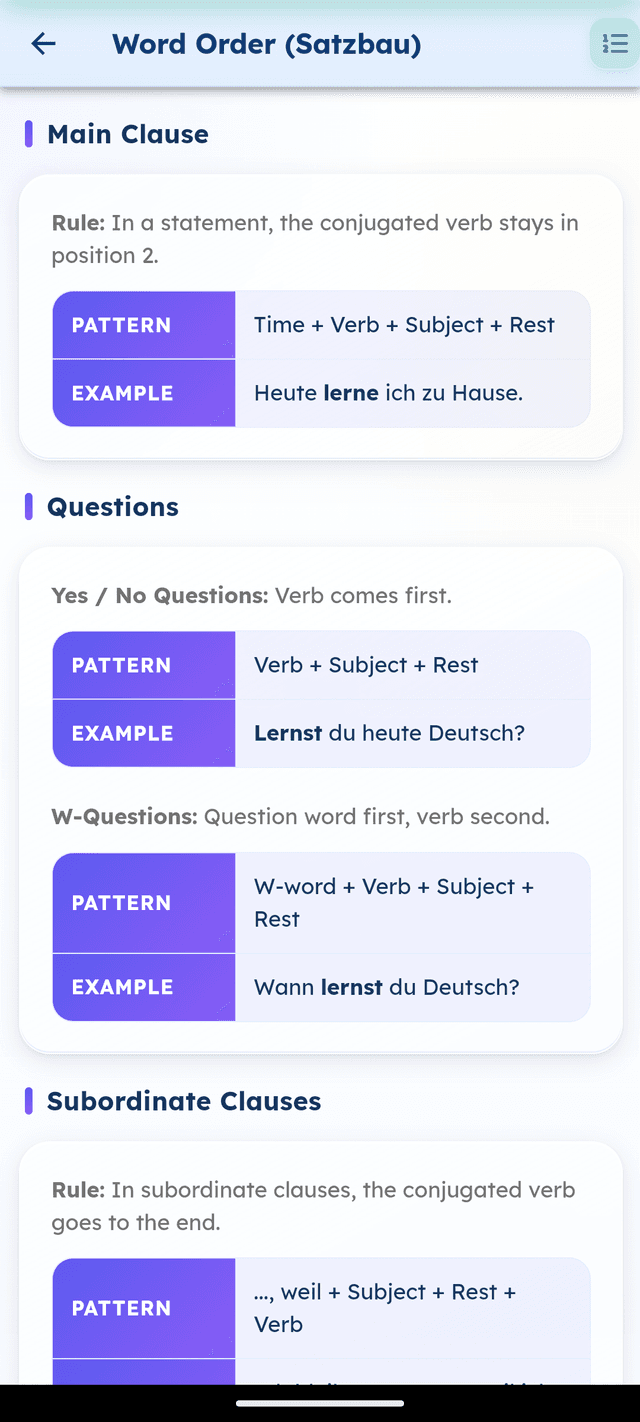
Word Order
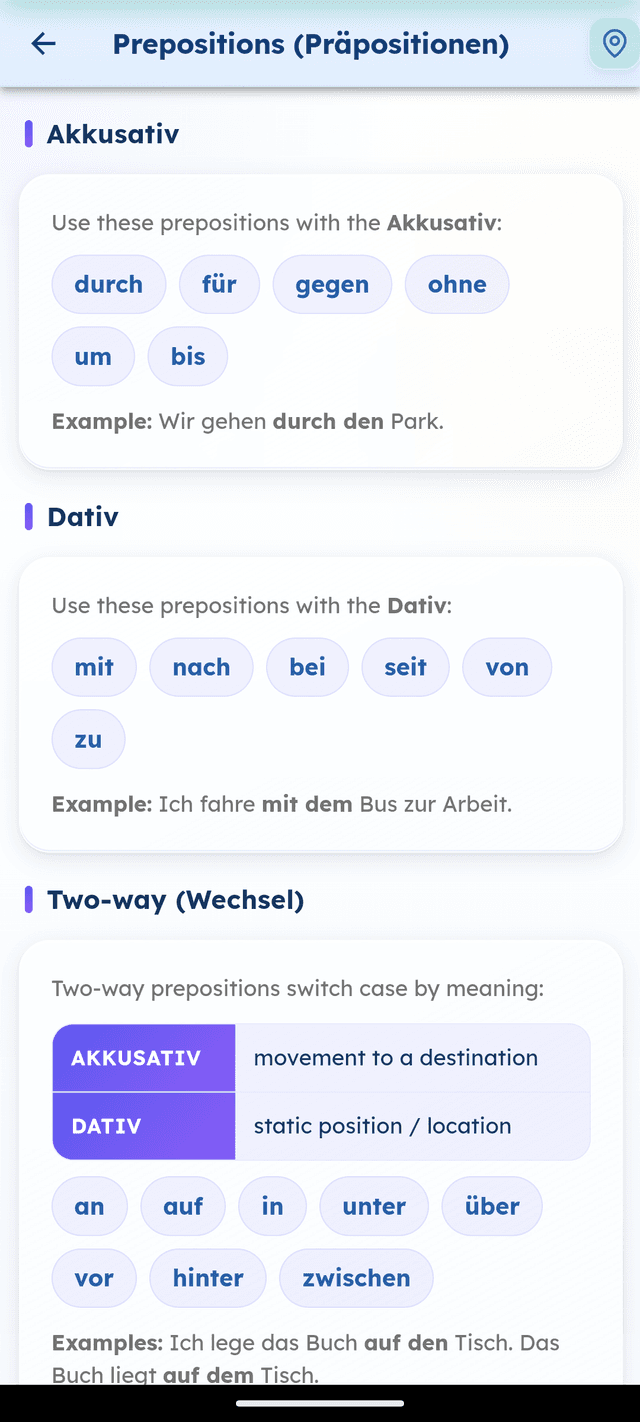
Prepositions
Separable Verbs
Sentence Builder
Frequently asked questions
What are the 4 German cases?
The four German cases are Nominative (subject), Accusative (direct object), Dative (indirect object), and Genitive (possession). Each case changes how articles and pronouns are written.
How do I know which gender a German noun is?
German noun gender must be learnt with each noun, but there are many reliable patterns. Nouns ending in -ung, -heit, -keit, -schaft are always feminine (die). Nouns ending in -chen or -lein are always neuter (das). Nouns ending in -er for a male person are usually masculine (der).
What is the difference between Accusative and Dative?
Accusative marks the direct object — the entity directly affected by the verb. Dative marks the indirect object — the recipient of an action. For example: "Ich gebe dem Mann (dative) das Buch (accusative)" — I give the man the book.
Are the grammar lessons free?
Yes. All grammar topics in GermanVault are free. Premium unlocks exam-level content and removes ads.
What grammar level does GermanVault cover?
GermanVault covers A1 through B2 grammar — from basic articles and present tense through to Konjunktiv II, Genitive, and complex word order rules.
Ready to master German?
Download GermanVault free on Android. No account required.
